There are so many different causes for shoulder pain…
They vary from the traumatic, such as dislocations and fractures, to the non-traumatic, such as overuse injuries and rotator cuff pain. To simply apply one fixed timeline to the shoulder would be negligent, so in this article, we are going to focus on the most common type of shoulder pain: rotator cuff pain.
The short of it is that rotator cuff pain typically takes 3-4 months to resolve. A lot longer than you thought…right?
But not all hope is lost.
This timeframe doesn’t mean you’ll be in that acute pain the whole time. There are phases and steps that are taken along the way, goals to achieve, and hopefully incremental improvements that finally allow you to return to golf, tennis, lifting the kids or grandkids or whatever else gets you out of bed in the morning.
I’m not just going to leave you with that though, so now let’s take some time to really understand why the shoulder takes this long to heal.
Understanding The Shoulder
Most of us have at least heard the phrase “rotator cuff” before. But for those without a university degree in physiotherapy, let’s break it down here.
The rotator cuff is comprised of 4 muscles that attach onto the head of the humerus (upper arm bone). They act as a stabilising system to pull the ball into the socket at the shoulder joint – a pretty important job! They also assist with shoulder elevation and rotation so that you can move your arm in all directions. Unlike the hip, which is a deep ball and socket joint, the shoulder is a shallow ball and socket joint. This means that stability is poor at the shoulder, which is both a good and a bad thing. It’s good because that means we can move it more to be able to do things with our arms, but bad because that means it’s susceptible to injury.
What Is Rotator Cuff Pain?
When I see clients with rotator cuff pain, it usually goes something like this:
- Their pain has gradually come on over time
- They have discomfort lifting their arm above their head
- They describe it as a ‘pinching’ or ‘grabbing’ pain at the tip of the shoulder
- They usually still have most of their range of movement, albeit painful
Most people are good at picking up that they are having issues with their shoulder and doing something about it immediately. However, some are not…(I’m talking to all the dads/granddads who think it’ll just fix itself up in a couple weeks and keep painting/fixing stuff/lifting heavy all day). I cannot stress enough that picking this up early will greatly speed up the process, or at least make it a lot less frustrating for you.
So, Why 3-4 Months?
The timelines are mainly dictated by our body’s ability to heal, and when we explain what the gold standard treatment is, this will make a lot more sense.
The best treatment for a painful shoulder is exercise. Hands down.
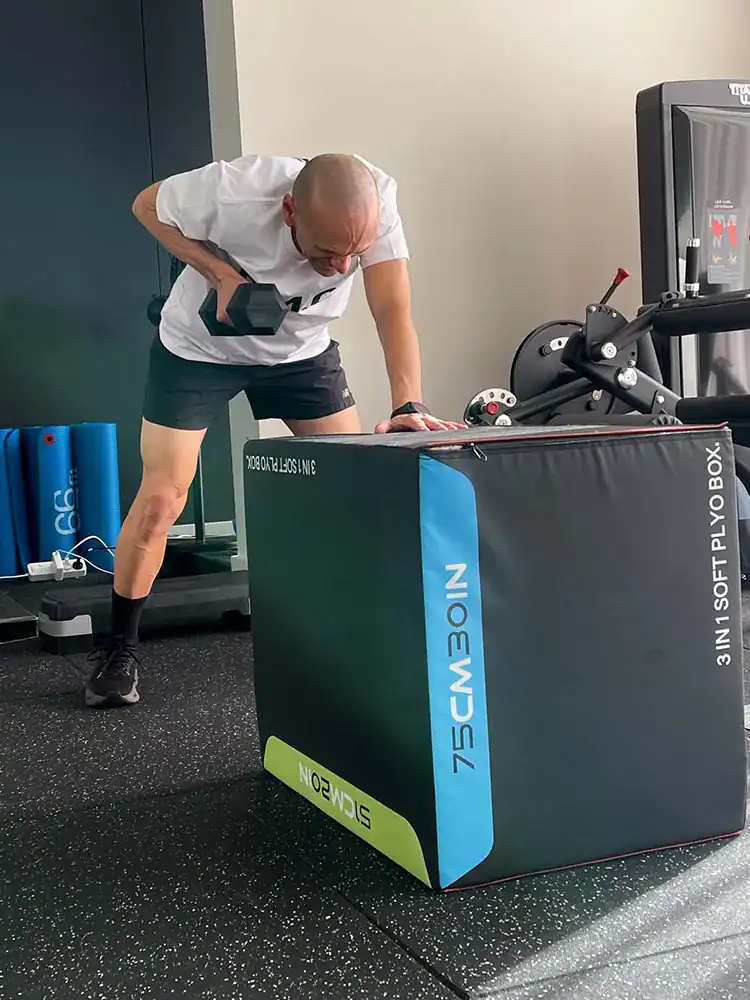
You cannot massage your way out of rotator cuff pain unfortunately…although how nice would that be. The reality is that to improve a painful rotator cuff, we need to improve your strength, stability and endurance through the shoulder. In the early stages of rehab, our goal is to get it moving with minimal pain, so we focus on light weights, high reps and controlled ranges of motion. This allows the muscles to improve their activation and control and typically takes a week or two. In the early stages, we may also use some hands on techniques, but only if there is an associated loss of movement. What we’ve found is that manual therapy alone is not effective, but exercise plus manual therapy for painful shoulders with a loss of movement is really effective.
After these initial stages, we will then look to work on increasing strength in below shoulder-height movements with heavier weights, and slowly increase the range of motion over time. For anyone that’s ever been to the gym before, you’ll understand that your body takes time to adapt and get strong, hence why our shoulders take time to improve and get better.
If you or someone you know is dealing with a painful shoulder, then come to Better Movement Collective Physiotherapy in Hampton. You can book an appointment here or read more about our shoulder pain physiotherapy service here: Shoulder Physiotherapy. We’d love the help!
Michael Scardamaglia
Director & Senior Physiotherapist