
Menopause: Let’s Talk About It.
Menopause.
It affects all women, yet we still don’t talk openly about it.
It’s time to change that.
It is one of the most significant changes that occurs during your life, but often women are left feeling unheard and unsupported. We want to begin to shed some light on the physical affects of menopause and help you to understand how physiotherapy can benefit your life.
What is Menopause?
In its simplest terms, menopause refers to the final menstrual period. When it has been 12 months since the last menstrual period, you are considered to be menopausal.
Most women become menopausal around the ages of 45-55, with the average age being 51 years. However, menopause can occur before the age of 40, which is considered early onset menopause.
Perimenopause refers to the time period before the menopause, all the way through until 1 year after the menopause. During this time period, there is significant fluctuations in hormone production, irregular cycles and many of the commonly known symptoms of menopause, such as hot flushes and interrupted sleep, occur. Some women can experience these symptoms for 5-10 years prior to their final menstrual cycle, demonstrating the significant impact this can have on women’s lives.
After the menopause, the ovaries stop producing follicles (egg cells) and ovulation ceases. This means that the regular hormonal cycle of oestrogen and progesterone is no longer occurring.
What are the symptoms of menopause?
There is a plethora of symptoms associated with menopause and perimenopause. The most common being:
- Hot flushes and night sweats
- Genitourinary Syndrome
- This refers to vulvovaginal atrophy symptoms such as vaginal dryness, burning, irritation, decreased lubrication with sexual activity and increased risk of UTIs.
- These changes occur due to the depletion of oestrogen hormone.
- Mood changes
- anxiety, irritability, forgetfulness, concentration troubles.
- If you have a history of mental health challenges, menopause can exacerbate this.
- Dry skin
- Decreased bone density
- Due to a reduction in oestrogen hormone.
- Decreased muscle mass
- Due to a reduction in oestrogen and human growth hormone.
- Metabolic changes
- Including weight gain, insulin resistance and increased blood pressure.
How do we manage menopause?
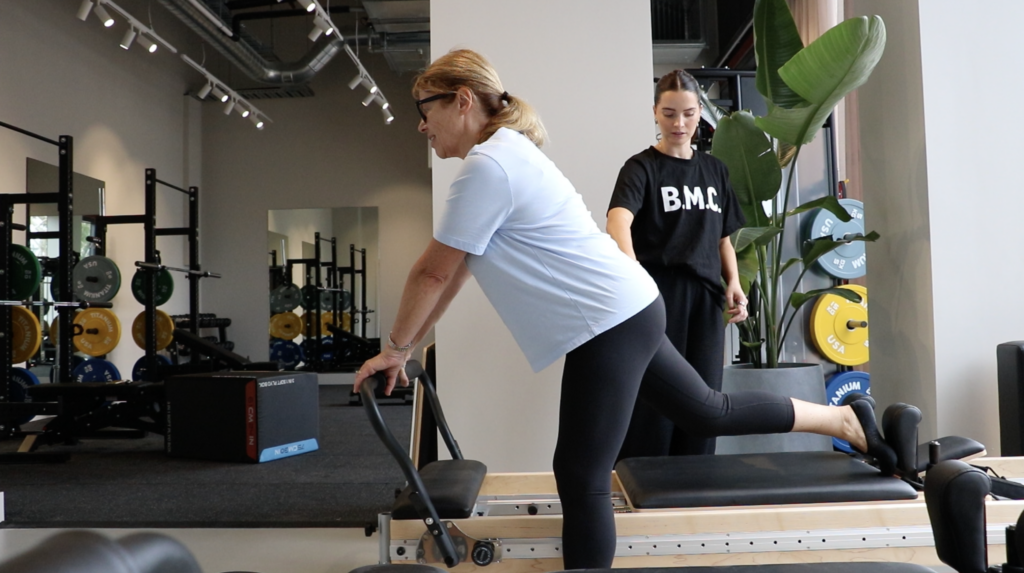
Menopause should be managed with your doctor as it is fundamentally a medical issue. Physiotherapy plays a role, in particular, around assisting with bone density and muscle changes, to ensure you can stay strong, active and healthy during this time of your life.
If you would like to find out more, register to attend our free event: Women’s Health & Ageing: A Conversation on 6th May, 2026.
Mackenzie Topfer
Physiotherapist
Better Movement Collective
References:
- What is Menopause? Information Sheet., Australasian Menopause society, 2026.